
From May 28 to 31, 2026, Zug will become the center of sports: Around 1,600 athletes with intellectual disabilities will compete at the National Summer Games of Special Olympics Switzerland, accompanied by 600 coaches. The field of participants will be complemented by delegations from 11 guest nations. For four days, athletic achievements, personal successes, and genuine encounters will take center stage.
The National Games are the largest sports event for people with intellectual disabilities in Switzerland and take place every two years—alternating between summer and winter. In Zug, competitions in 16 sports will be held. Many of them are within walking distance around the square in front of the OYM hall, where a vibrant Olympic Village will emerge—with hands-on activities, partner booths, and refreshments. Short distances create closeness, exchange, and a dense, captivating atmosphere.
The Games bring people together: athletes, visitors, fans, and up to 1,500 volunteers shape the event together. An additional family program offers around 200 relatives space for exchange and support. The event also has broad international backing: delegations from Austria, France, Germany, Gibraltar, Italy, Liechtenstein, Monaco, Poland, San Marino, Ukraine, and Uzbekistan will participate.
Festive opening with Sports Minister Martin Pfister and singer Marc Sway
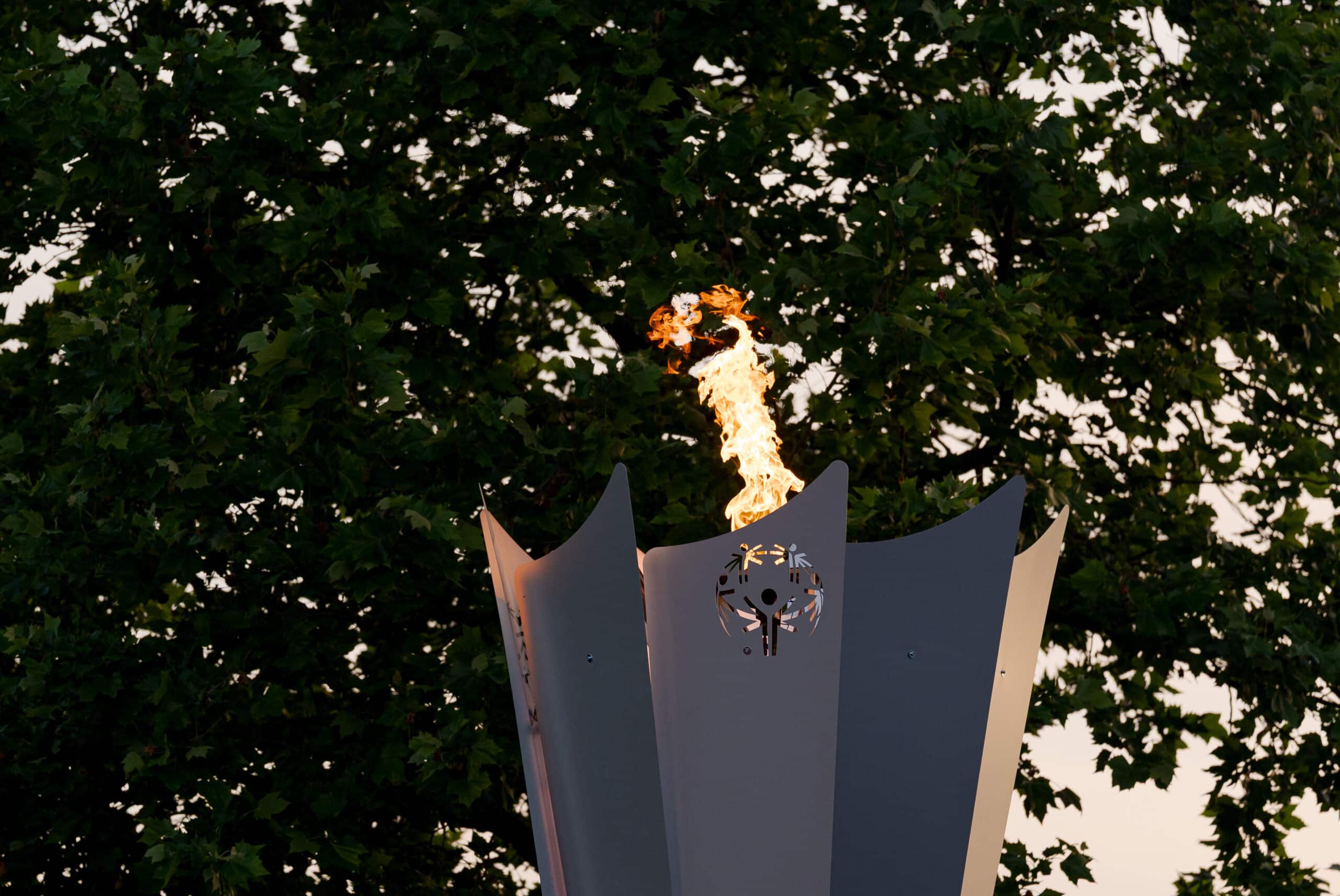
The opening ceremony on Thursday evening, May 28, 2026, will captivate guests and athletes alike. The march of the delegations, the Special Olympics anthem, and the lighting of the “Flame of Hope” will create impressive and emotional moments. Singer Marc Sway will add to the goosebumps by presenting a song specially adapted for the Games for the first time. Another highlight will be the visit of Federal Councillor and Sports Minister Martin Pfister, who will address the athletes with personal words. The evening will be hosted by Christa Rigozzi and Nik Hartmann.
Competition on equal footing: the sports philosophy behind Special Olympics
What makes Special Olympics special is evident in the competition itself: The focus is not on the disability, but on individual performance. What matters is what someone can do—and the commitment to give their personal best.
To ensure that all participants—regardless of their ability level—have a fair chance of success, Special Olympics uses what is called divisioning: At the beginning of the Games, all athletes complete classification competitions and practice their respective sport as in a real competition. Based on the results achieved, the division is made. The performance difference within a group should not exceed a certain benchmark (approximately 15%). In these groups, three to a maximum of eight athletes compete against each other. This creates fair competition on equal footing. Anyone competing here knows: If I give my best, I can win.
Dedicated organizing committee
The National Summer Games are being implemented by the local organizing committee with great commitment and professionalism. The goal is an event that moves, connects, and makes inclusion visible. A diverse supporting program invites the public to become part of this special moment.
Preparation for World Games Santiago 2027
The National Games are more than a sports event. They create space for encounters, build bridges, and show what is possible when people can contribute their strengths. For many athletes, they are also a potentially important milestone in their athletic career: Participation is a prerequisite for possible selection for the World Games 2027 in Santiago, Chile.
Program overview
May 28, 2026 → Divisionings in all sports, opening ceremony at the OYM hall from 5:00 PM
May 29 and 30, 2026 → Competitions, Olympic Village with attractions, shows, and medal ceremonies
May 31, 2026 → Final competitions and medals, closing ceremony from 3:00 PM


